
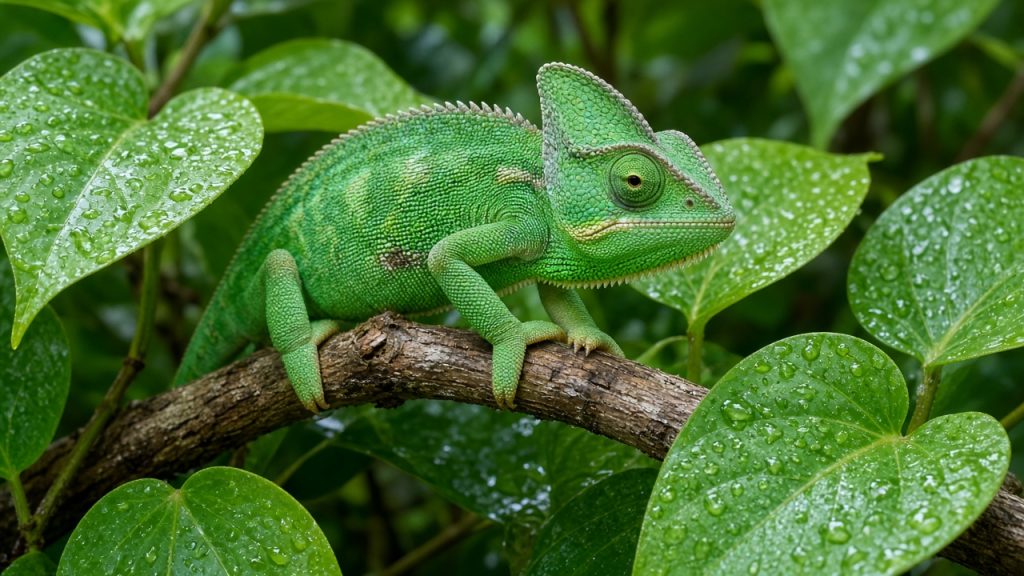
The most common chameleon health problems are dehydration, metabolic bone disease (MBD), mouth rot, eye infections, respiratory infections, gout, parasites and, in females, egg binding. Almost all of them trace back to husbandry: too little water, missing or old UVB, the wrong supplement routine, or a cage that is too hot, too cold or too wet. Sunken eyes, a closed eye, a swollen jaw, bent legs, a weak tongue, bubbles from the mouth or a chameleon that sits dark and still at the bottom of the cage all mean you should fix the setup today and book a reptile vet.
Chameleons hide illness well, so by the time a problem is easy to see it has usually been building for a while. This guide groups the common problems by what you will actually notice, explains the usual causes, and shows what you can safely do at home. Each section links to our more detailed guide for that problem. It is a starting point, not a diagnosis: a vet who sees reptiles is the only one who can confirm what is wrong.
Table of Contents
Quick Symptom Checker
Match what you see with the most likely causes, then read the section below.
| What you see | Common causes | How urgent |
|---|---|---|
| Sunken eyes, wrinkled or sticky skin, thick orange urates | Dehydration | Fix misting and drippers today; vet if no better in 2 to 3 days |
| Soft or bent legs, swollen limbs, rubbery jaw, weak grip | Metabolic bone disease (no UVB, old bulb, no calcium) | Vet soon; MBD can cause fractures |
| Tongue misses prey or will not shoot | Early MBD, low calcium, injury, mouth infection | Vet soon |
| Swelling, discolored gums, cheesy material in the mouth | Mouth rot (stomatitis) | Vet; needs proper treatment |
| One or both eyes swollen or kept shut | Eye infection, stuck debris, low humidity, vitamin A problems | Vet if shut for more than a day |
| Mouth open often, bubbles or mucus, wheezing or clicking | Respiratory infection; also overheating if only at the basking spot | Vet soon |
| Swollen, hard joints or a lump that does not go down | Gout (often linked to dehydration or too much protein) | Vet |
| Runny, very smelly or bloody poop, weight loss | Parasites, diet problems, infection | Vet with a fresh fecal sample |
| Female restless, digging, swollen belly, not eating | Ready to lay or egg binding | Give a lay bin now; vet if she does not lay |
| Dark colors, eyes closed, sitting on the cage floor | Serious illness, cold cage, end stage of almost any problem | Vet as soon as possible |
Dehydration
Dehydration is the most common chameleon health problem and it makes almost every other one worse. Chameleons rarely drink from a bowl; they lap moving droplets from leaves, so a cage that is misted too briefly or too rarely leaves them short of water even when water is “available.”
Signs: sunken eyes, skin that looks loose or wrinkled, sticky or thick saliva, and urates that are orange or yellow instead of white. A dehydrated chameleon may also eat less and become lethargic.
What to do: mist longer (a few minutes, so droplets run down the leaves), add a dripper, and check that the plants actually hold water. Our guides on dehydration in chameleons, getting your chameleon to drink and how often to mist a chameleon cage cover the details. If your chameleon still looks sunken after a few days of better hydration, see a vet, who can give fluids.
Metabolic Bone Disease (MBD)
MBD happens when a chameleon cannot get or use enough calcium, so its body pulls calcium out of the bones. The usual causes are no UVB light, a UVB bulb that is old or blocked by glass or plastic, and feeder insects that are not dusted with calcium.
Signs: bowed or swollen legs, a soft or rubbery lower jaw, a weak grip, trouble climbing, falling, tremors, and a tongue that does not shoot properly. In young chameleons it can develop quickly.
What to do: MBD needs a vet, because a chameleon with weak bones can break them, and severe cases need prescribed calcium. At home, make sure the UVB is a reptile UVB tube or bulb that is within its replacement date, shines through mesh rather than glass, and that insects are dusted on the schedule your vet recommends. See our related guides on a chameleon that cannot shoot its tongue, a chameleon not using its back legs, a shaking chameleon and UVB and heat at night.
Mouth Rot (Stomatitis)
Mouth rot is an infection of the gums and jaw. It often starts after a small injury in the mouth and takes hold when the chameleon is stressed, dehydrated or kept too cool.
Signs: swelling along the jaw, gums that look red, gray or dark, cheesy yellow-white material along the teeth, and refusing
What to do: see a vet; mouth rot does not reliably clear up on its own and can spread. Read our full guide to chameleon mouth rot.
Eye Problems and Eye Infections
A chameleon that keeps one or both eyes closed during the day is telling you something is wrong. Common causes are an eye infection, a bit of debris or stuck shed, low humidity, and vitamin A problems (both too little and too much from heavy supplementing).
Signs: an eye that is swollen, kept shut, rubbed on branches, or that does not swivel normally.
What to do: a gentle misting can rinse out light debris. If an eye stays closed for more than a day, or looks swollen, see a vet. More in our guide to eye infections in chameleons.
Respiratory Infections
Respiratory infections are usually linked to a cage that is cold, stays wet with poor airflow, or both, especially when the chameleon is also stressed or dehydrated.
Signs: bubbles or mucus at the mouth or nostrils, wheezing or clicking sounds, the mouth held open away from the basking spot, stretching the neck up to breathe, and lethargy.
What to do: an open mouth only under the basking light can just mean your chameleon is cooling off; check the basking temperature first. Open-mouth breathing with mucus or noise needs a vet, as respiratory infections often need prescribed treatment. See why your chameleon’s mouth is open.
Gout
Gout is a build-up of uric acid crystals in the joints or organs. In chameleons it is commonly linked to long-term dehydration and diets that are too heavy in protein.
Signs: swollen, firm joints, reluctance to climb or grip, and pain when moving.
What to do: gout needs a vet. Improving hydration and keeping feeder portions sensible helps prevent it. Read more about gout in chameleons.
Digestive Problems and Parasites
Healthy chameleon poop is a firm brown or dark part with a white urate. Changes are often one of the first signs of trouble.
- Diarrhea can come from parasites, bacteria, poor-quality feeders or stress. See chameleon diarrhea.
- Vomiting can mean a cage that is too hot or too cold to digest, too large a meal, or illness. See chameleon throwing up.
- Poop stuck in the cloaca is often a hydration problem. See chameleon has poop stuck in its cloaca.
Parasites are common in wild-caught chameleons and can also come from feeders. Weight loss despite eating, runny or very smelly poop, and a sunken body are typical signs. A vet can check a fresh fecal sample; do not use over-the-counter dewormers without advice.
Egg Binding in Females
Female veiled and panther chameleons can produce eggs without a male. If she has nowhere suitable to lay, or is low in calcium or dehydrated, she can become egg bound, which is an emergency.
Signs: a swollen belly, pacing or digging, wandering the cage floor, then refusing
What to do: give every adult female a deep, moist lay bin before she needs it. Our guide to setting up a chameleon lay bin explains how. If she is digging but not laying, or is weak and dark, see a vet the same day.
Weight Loss, Not Eating and Lethargy
These are general signs rather than diseases, but they are often the first thing owners notice. A chameleon that stops eating for a few days during a shed or a temperature drop may be fine. One that keeps refusing
Skin and Tail Problems
- White spots are often dried minerals from hard water or a shed starting, but can sometimes be a skin infection or fungus. See white spots on a chameleon.
- Turning pale or white can be shedding, sleep, or stress. See why your chameleon is turning white.
- Tail rot shows as a dark, dry tail tip that spreads, usually after an injury or poor circulation, and needs a vet. See chameleon tail rot.
When to See a Reptile Vet
Book a vet who treats reptiles if you notice any of these:
- Eyes closed during the day for more than a day, or swollen
- Bent, soft or swollen limbs, or a rubbery jaw
- Tongue that will not shoot or misses repeatedly
- Swelling or cheesy material in the mouth
- Bubbles, mucus or noisy breathing
- No
food for more than a week (outside of a known shed), or visible weight loss - A female who is digging, swollen and weak but not laying
- Dark colors and sitting on the cage floor
If your chameleon is very weak, read signs your chameleon may be dying and treat it as an emergency.
How to Prevent Most Chameleon Health Problems
- Water first: long misting sessions plus a dripper, and live plants that hold droplets.
- UVB that works: a reptile UVB source over mesh, replaced on the maker’s schedule even if it still glows.
- A sensible supplement routine: calcium dusting on most feedings and multivitamins sparingly, as your vet advises.
- A temperature gradient: a warm basking spot at the top and cooler areas lower down, with a temperature drop at night.
- Airflow: a mesh or hybrid cage so the enclosure dries out between mistings.
- Varied, gut-loaded feeders in portions that suit your chameleon’s age.
- Low stress: one chameleon per cage, plenty of cover, and limited handling.
Our veiled chameleon care guide, panther chameleon care guide and veiled chameleon cage setup go through each of these. And to know what normal looks like, see signs your chameleon is happy and healthy.
Chameleon Health FAQ
What is the most common health problem in chameleons?
Dehydration is the most common, and it contributes to many others, including gout, stuck poop and poor shedding. Metabolic bone disease is the other big one, caused by missing UVB or calcium.
How do I know if my chameleon is sick?
Look for changes from normal: eyes closed or sunken during the day, dark colors, sitting low in the cage, not eating, a weak grip or tongue, swelling, and unusual poop or urates. Several of these together are a strong sign to see a vet.
Can a chameleon recover from metabolic bone disease?
Mild and moderate MBD can often improve with veterinary treatment and corrected UVB and calcium, though bones that have already bent may stay bent. Severe cases are harder to treat, which is why early action matters.
Why is my chameleon keeping its eyes closed?
At night it is just sleeping. During the day, closed eyes often mean dehydration, an eye infection, debris in the eye, or general illness. If it lasts more than a day, see a vet.
Is it normal for a chameleon to sit with its mouth open?
Briefly, under the basking light, yes: it is cooling down. Open-mouth breathing away from the heat, or with bubbles, mucus or noise, can be a respiratory infection.
Can I treat my chameleon at home?
You can fix husbandry at home: hydration, UVB, temperatures, supplements and a lay bin. Infections, MBD, gout, parasites and egg binding need a reptile vet, because they usually need prescription treatment.


- Chameleon Health Problems: Common Illnesses & Warning Signs - November 17, 2026
- Bearded Dragon Eye Problems: Causes, Symptoms & What to Do - November 13, 2026
- Bearded Dragon Poop Guide: Healthy vs Abnormal (Chart) - November 12, 2026