
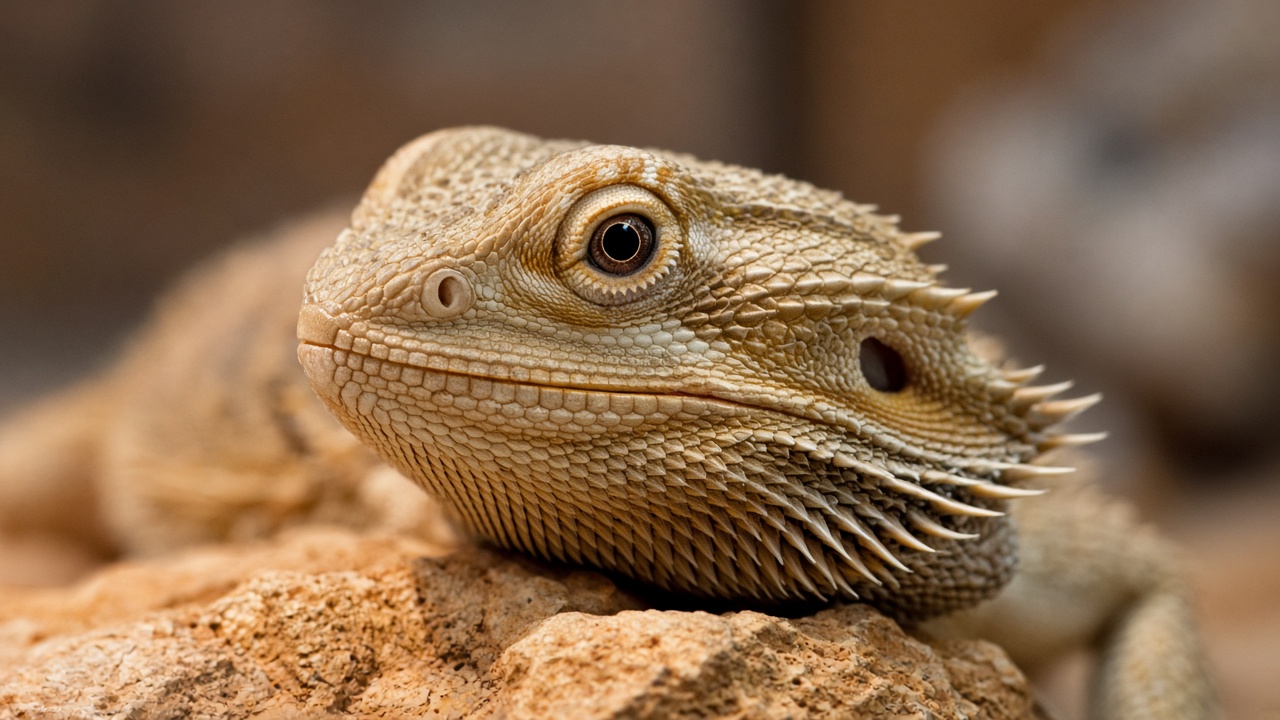
Most bearded dragon eye problems come from one of five things: a stuck shed, dust or substrate in the eye, low humidity or dehydration, an infection, or a diet missing vitamin A. Gently rinsing the eye with lukewarm water and fixing humidity and UVB solves many mild cases within a day or two. Swelling, pus, a bulging eye, an eye that stays shut for more than a day, or a dragon that also stops eating needs a reptile vet.
Bearded dragons rely on their eyes to hunt, bask and read their surroundings, so any change is worth a closer look. This guide brings together the common symptoms, what usually causes each one, what you can safely do at home, and which signs mean you should book an exotic vet. Each section links to our more detailed guide for that symptom.
Table of Contents
Quick Symptom Checker
Use this table to match what you see with the most likely causes. It is a starting point, not a diagnosis.
| What you see | Common causes | How urgent |
|---|---|---|
| Eyes closed while awake, in the daytime | Too-bright or too-hot basking spot, stress, shedding, tiredness, irritation | Watch for 24 hours; vet if eyes stay shut or other signs appear |
| Eyes bulging out, then going back to normal | Normal behavior that helps loosen skin around the eyes before a shed | Usually normal |
| One eye stays swollen or puffy | Infection, abscess, injury, stuck shed, vitamin A deficiency | Vet within a day or two |
| Sunken eyes | Dehydration, not eating, illness | Fix hydration now; vet if it doesn’t improve within a day or the dragon is weak |
| Cloudy or milky eye | Shed skin over the eye, injury to the cornea, infection | Vet if it isn’t clearly shed-related |
| Watery eyes | Dust or substrate particles, irritation, early infection | Rinse and watch; vet if it lasts more than a couple of days |
| Crusty eyelids, pus or discharge | Bacterial infection, stuck shed, dirty enclosure | Vet |
| Red, injured or scratched eye | Fight with a |
Vet |
Bearded Dragon Eye Infection
An eye infection usually shows up as swollen or red eyelids, crust or a yellowish discharge, and a dragon that keeps one or both eyes closed. It often starts after something else has gone wrong: a scratch, a bit of substrate stuck under the lid, shed skin trapping dirt, or an enclosure that is too dirty or too damp.
Bacterial infections normally need prescription eye drops or ointment, and sometimes oral or injected antibiotics, so this is not one to treat with home remedies. Until the vet visit, keep the enclosure very clean, switch loose substrate to paper towel or tile, and make sure your dragon can still find
Swollen or Puffy Eyes
A swollen eye can mean an infection, an abscess forming behind the eye, an injury, or a retained shed pressing on the eyelid. Swelling in both eyes, especially in a dragon that eats mostly insects with few vegetables, can also point to vitamin A deficiency, which causes the tissue around the eyes to swell.
Firm swelling that doesn’t change over a day or two needs a vet, since abscesses usually have to be drained. Our guide to bearded dragon swollen eyes covers each cause in more detail.
Bulging Eyes (Eye Bulging)
Many first-time owners panic the first time they see their beardie puff its eyes out. In most cases this is completely normal. Dragons often bulge their eyes before and during a shed to stretch and loosen the skin around the eyelids, and some do it when they yawn or stretch. The eye goes back to normal within seconds or minutes.
It is a concern only when an eye stays bulged out, looks red, or the dragon also seems unwell. Learn the difference in our article on bearded dragon eye bulging.
Sunken Eyes
Sunken eyes are one of the clearest signs of dehydration in a bearded dragon. You may also notice wrinkled or loose skin, thick or orange urates, and a dragon that is less active or not pooping. Sunken eyes can also show up in dragons that have stopped eating for a while or are seriously ill.
For mild dehydration, offer water by dripping it on the snout, give a shallow lukewarm bath, and add hydrating greens to the diet. If the eyes are still sunken the next day, or your dragon is weak or not eating, see a vet, because dehydration can be a sign of something more serious. More in our guide to bearded dragon sunken eyes.
Cloudy Eyes
A cloudy or milky look often comes from shed skin sitting over the eye area, especially when the rest of the body is also shedding. That clears on its own once the shed comes off. Cloudiness that stays after the shed, appears in only one eye with redness, or looks like a white spot on the eye surface can mean a corneal injury or infection.
Don’t try to peel anything off the eye itself. Read our article on bearded dragon cloudy eyes for what to look for.
Watery Eyes
Watery eyes usually mean something is irritating them, such as sand, loose substrate, dust from calcium powder, or a strong cleaning product. Sometimes the dragon is just flushing out a particle and the watering stops within hours. If it continues for more than a couple of days, or the eye becomes red or crusty, an early infection may be starting. See bearded dragon watery eyes for more.
Why Is My Bearded Dragon Closing Its Eyes?
Closing the eyes during the day is common and usually harmless. Dragons often close their eyes while basking, when they’re relaxed and being held, when they are getting ready to sleep, or when the light feels too intense. It becomes a worry when the eyes stay closed all day for more than a day, only one eye stays shut, or your dragon also stops eating or moving much. We explain all of the reasons in why your bearded dragon is closing its eyes.
What About the Third Eye?
Bearded dragons have a small gray spot on the top of the head called the parietal eye, or third eye. It can’t see images, but it senses light and shadow, which helps the dragon notice birds of prey overhead and keep its day and night rhythm. It’s normal for it to look like a scale or a tiny dot. Learn more about the bearded dragon’s third eye.
Common Causes Behind Most Eye Problems
- Stuck shed: skin left around the eyelids can trap dirt and irritate the eye. Correct humidity and a lukewarm bath help shed come off naturally.
- Substrate and dust: sand, calcium-sand and fine particles get into the eyes, especially while dragons dig or chase insects.
- Low humidity or dehydration: leads to sunken eyes and harder sheds. Most bearded dragons do well around 30 to 40 percent humidity; see our bearded dragon humidity guide.
- Lighting problems: a basking bulb that’s too close or too bright can make dragons squint, while poor or old UVB weakens overall health. Our best UVB light for bearded dragons article explains what to use and how far away to mount it.
- Diet: too few vitamin-rich greens and vegetables can lead to vitamin A deficiency, which shows up around the eyes. Supplement as your vet recommends rather than adding extra vitamin A on your own, since too much is also harmful.
- Injury: sharp decor, rough handling,
tank mates and live crickets left in the enclosure can all scratch an eye. - Stress: a stressed dragon may keep its eyes shut and stop eating. See our guide to bearded dragon stress.
What You Can Safely Do at Home
- Look closely in good light. Check both eyes, the eyelids and the skin around them for shed, debris, swelling, discharge or injury.
- Rinse gently. Use lukewarm water or a sterile saline eyewash, dripped from the corner of the eye or applied with a soft, damp cotton pad. Never rub the eye or use cotton swabs on the eyeball.
- Clean up the enclosure. Swap loose substrate for paper towel, tile or a solid liner while the eye heals, and remove uneaten live insects.
- Check the setup. Measure basking and cool-side temperatures and humidity with a digital thermometer and hygrometer, and make sure the UVB tube is within its replacement window.
- Support hydration. Offer water on the snout, a shallow bath, and leafy greens.
- Watch for 24 to 48 hours. Write down whether the eye is improving, whether your dragon is eating, and whether it is pooping normally. Our bearded dragon poop guide helps with that part.
Don’t use human eye drops, antibiotic ointments left over from other pets, or home remedies like tea or honey in the eye. They can make an infection or injury worse.
When to See a Reptile Vet
Book an exotic or reptile vet if you notice any of these:
- Pus, yellow or green discharge, or crusting that comes back after cleaning
- Swelling that doesn’t go down within a day or two
- An eye that stays closed for more than 24 hours, or that stays bulged out
- Redness, a visible wound, or a white or cloudy spot that is not shed skin
- Eye problems together with not eating, weakness, weight loss or a swollen mouth (see bearded dragon mouth rot)
- Both eyes swollen in a dragon on a mostly insect diet
Eye problems often get worse quickly in reptiles, and early treatment is usually simpler and cheaper.
How to Prevent Eye Problems
- Use a solid or low-dust substrate, and spot-clean daily.
- Keep humidity in the right range and give a bath during sheds if the skin is stuck.
- Mount the basking bulb and UVB at the correct distance, and replace UVB tubes on schedule.
- Feed a varied diet with plenty of leafy greens and vegetables, not insects alone.
- Don’t leave live insects in the
tank overnight, and keep bearded dragons housed alone. - Check your dragon’s eyes during every handling session so you notice changes early. Our bearded dragon care guide covers the full routine.
Frequently Asked Questions
Can a bearded dragon eye infection go away on its own?
Mild irritation from dust or shed often clears after a gentle rinse and a cleaner enclosure. A true bacterial infection, with swelling and discharge, usually needs prescription treatment from a vet and is unlikely to clear by itself.
Why is my bearded dragon keeping one eye closed?
One closed eye usually means that eye is irritated, injured or infected. Look for debris or stuck shed and rinse gently. If it stays shut for more than a day or looks swollen, see a vet.
Is it normal for a bearded dragon to puff out its eyes?
Yes. Eye bulging is common before and during a shed and when a dragon stretches. It’s only a concern if the eye stays bulged, looks red, or the dragon seems ill.
What do sunken eyes mean in a bearded dragon?
Sunken eyes most often mean dehydration. Offer water, a lukewarm bath and hydrating greens, and check humidity. If the eyes don’t improve within a day, or your dragon is weak or not eating, see a vet.
Can I use human eye drops on my bearded dragon?
No. Medicated human eye drops can harm a reptile’s eye. Plain sterile saline is fine for rinsing, but anything with medication should come from a reptile vet.
Can bearded dragons go blind?
Yes, untreated infections, injuries and some long-term health problems can damage a bearded dragon’s eyesight. That’s why it’s best to get persistent eye problems checked early.


- Bearded Dragon Eye Problems: Causes, Symptoms & What to Do - November 13, 2026
- Bearded Dragon Poop Guide: Healthy vs Abnormal (Chart) - November 12, 2026
- Enchi Ball Python: A Unique and Stunning Morph of Python regius - March 27, 2025